
When You Look at the Stars, You Are Looking Into the Past

Updated: Sep 29
The night sky is not showing us the Universe as it is today. It is showing us its history. Have you ever looked up at the stars and wondered what you were actually seeing?
That small point of light above you may look like a simple star, but there is something remarkable happening every time you look at it.
You are looking into the past. The reason is simple: light takes time to travel through space. And because the Universe is incredibly vast, the light from some stars has been travelling for years, centuries, or even thousands of years before finally reaching your eyes.
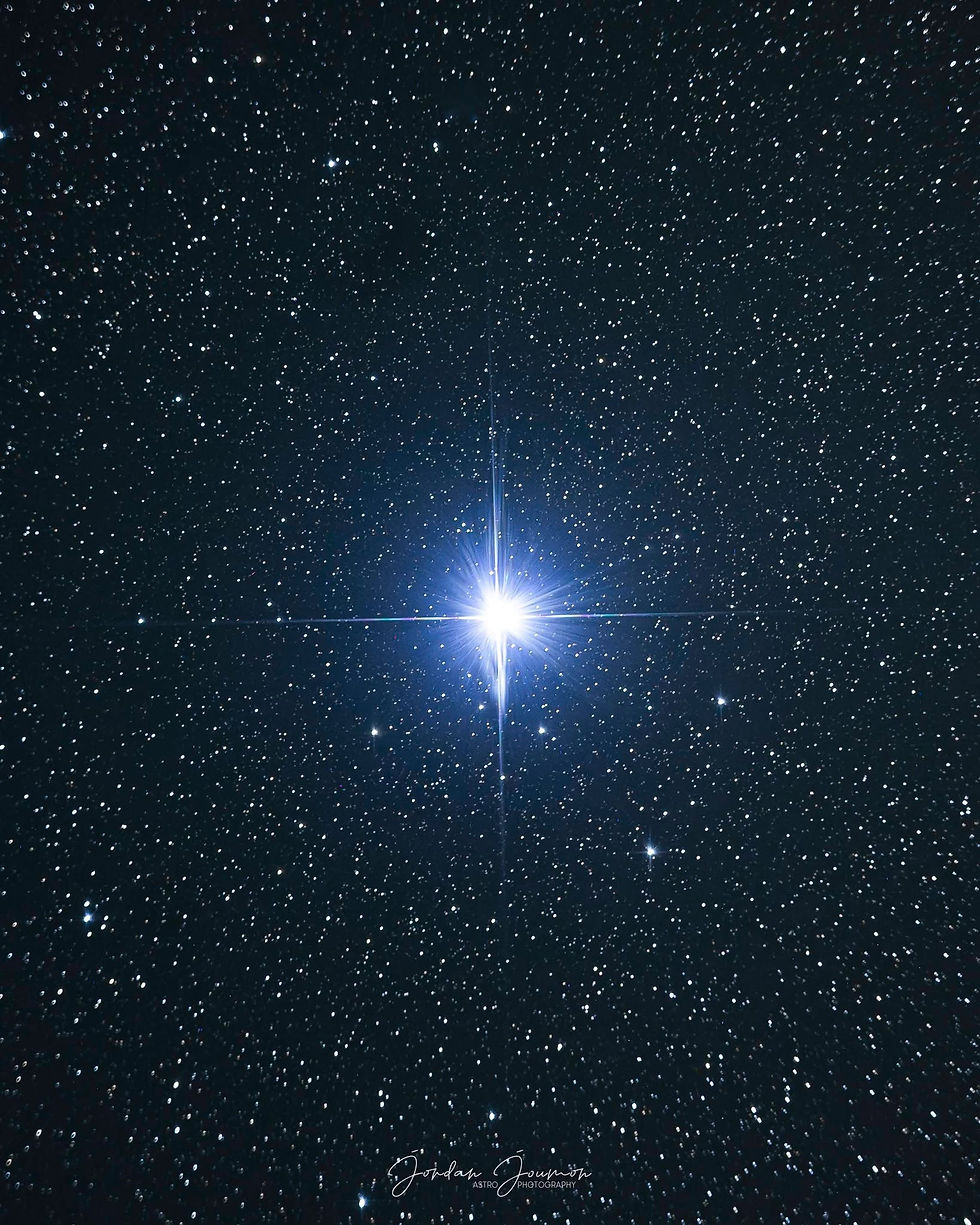
Light is our messenger from the Universe; it travels at an astonishing speed of approximately 300,000 kilometres every second.
That is fast enough to travel around Earth more than seven times in just one second.
But space is so enormous that even light needs a considerable amount of time to cross it.This is why astronomers use a special unit of distance called the light-year.
A light-year is simply the distance light travels in one year, approximately 9.46 trillion kilometres. So when we say that a star is 100 light-years away, we are saying that its light takes 100 years to reach us. That also means that when you see that star tonight, you are seeing it as it was 100 years ago.
The night sky is a window into time...
Imagine looking at a star that is 1,000 light-years away.
The light reaching your eyes tonight began its journey approximately 1,000 years ago.
At the time that light started travelling towards Earth, our planet was a very different place.
People were living completely different lives. Civilisations were rising and falling. Technology that we consider ordinary today did not exist. Yet that tiny beam of light continued travelling through space until, thousands of years later, it reached Earth.
And perhaps tonight, it reaches your eyes while you are standing beneath the Mauritian sky.
You are seeing ancient light.
Even the Sun is not seen in real time We don't need to look thousands of light-years away to experience this effect. Our own Sun is approximately 150 million kilometres from Earth. Because of this distance, sunlight takes about 8 minutes and 20 seconds to reach us.
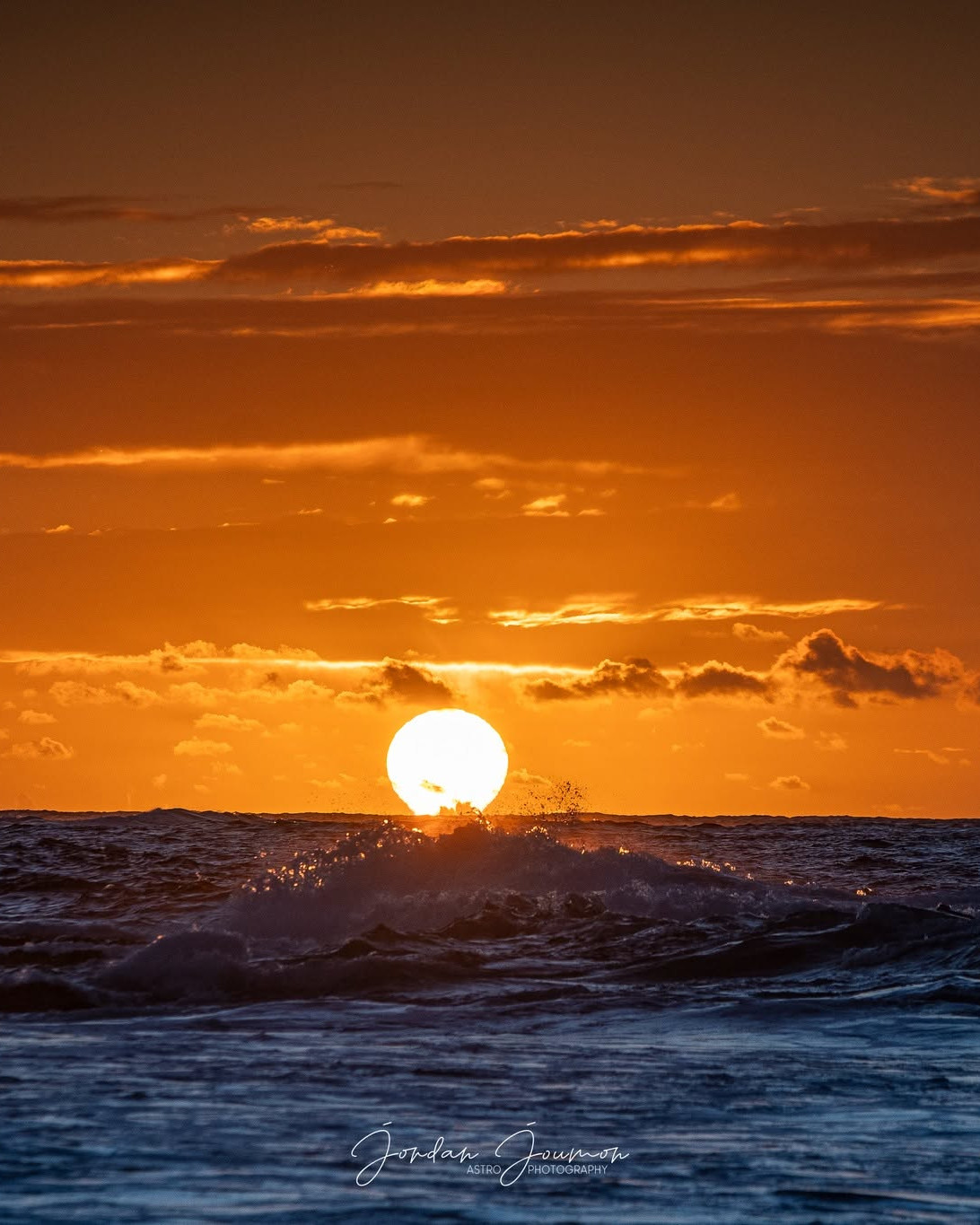
That means when you look at the Sun, you are actually seeing the Sun as it was approximately eight minutes ago. If something changed on the Sun right now, we would not see that change immediately. We would have to wait for the information carried by its light to travel across space and reach Earth.
And the Moon?
The Moon is much closer. Its light takes only around 1.3 seconds to reach us. So when you look at the Moon, you are seeing it approximately 1.3 seconds in the past. The principle is exactly the same.The farther away something is, the further back in time we see it.

What if a star disappeared today?
Here's where things become really interesting. Imagine there is a star 500 light-years away. Suppose, somehow, that the star stopped shining today. Would we see it disappear tonight?
No. We would continue seeing its light for another 500 years.
Why? Because the last light it produced would still need 500 years to reach us. Only then would we see that the star had changed. This is one of the most fascinating things about astronomy: We can only see information once it has had enough time to reach us. When we look into space, we are always receiving information from the past.
The farther we look, the further back we see. Now take this idea to an even greater scale. Some galaxies are millions or even billions of light-years away. Their light has been travelling across the Universe for an enormous amount of time before reaching our telescopes. When astronomers observe one of these distant galaxies, they are not seeing the galaxy as it looks today. They are seeing it as it looked millions or billions of years ago.

In fact, some of the oldest light we can observe has been travelling towards us for almost the entire history of the Universe. This is why powerful telescopes such as the James Webb Space Telescope are so important. They don't simply allow us to see farther. They allow us to see further back in time.
A sky full of different moments
There is another beautiful consequence of this. When you look at the night sky, you are not looking at everything as it existed at one particular moment. You are seeing different moments in time simultaneously. A nearby star might show you light from a few years ago. Another star might show you light from hundreds of years ago. A distant galaxy might show you what the Universe looked like billions of years ago.
All of those ancient photons arrive at Earth and enter our eyes or our telescopes. The night sky is therefore more than a collection of stars. It is a collection of different moments in cosmic history.
So, what are you really seeing?
The next time you are outside on a clear night in Mauritius, take a moment before reaching for your phone, look up. That star above you might be showing you a version of itself from decades, centuries, or thousands of years ago. The Moon is approximately 1.3 seconds in the past. The Sun is approximately 8 minutes and 20 seconds in the past. And distant galaxies can show us a Universe that existed billions of years ago. You are not simply looking across space. You are looking through time. Every photon reaching your eyes is carrying information from somewhere else in the Universe and from another moment in history. So perhaps the next time you look at the stars, don't just ask:
"What am I looking at?"
Ask:
"When did this light begin its journey?"
That simple question can completely change the way you see the night sky.
Look up. There is more than meets the eye. At Astro Mauritius, we believe astronomy should begin with curiosity. You don't need to be an astronomer. You don't need to understand complicated equations.
Sometimes, all you need is a clear night, a dark sky and a reason to look up. Because when you stand beneath the stars, you are not just looking at distant objects.
You are looking at the history of the Universe.
Jordan JOUMON September 2026
Comments